Ammonio-Smectite — NIR2,126 points · 4000–12500 cm⁻¹
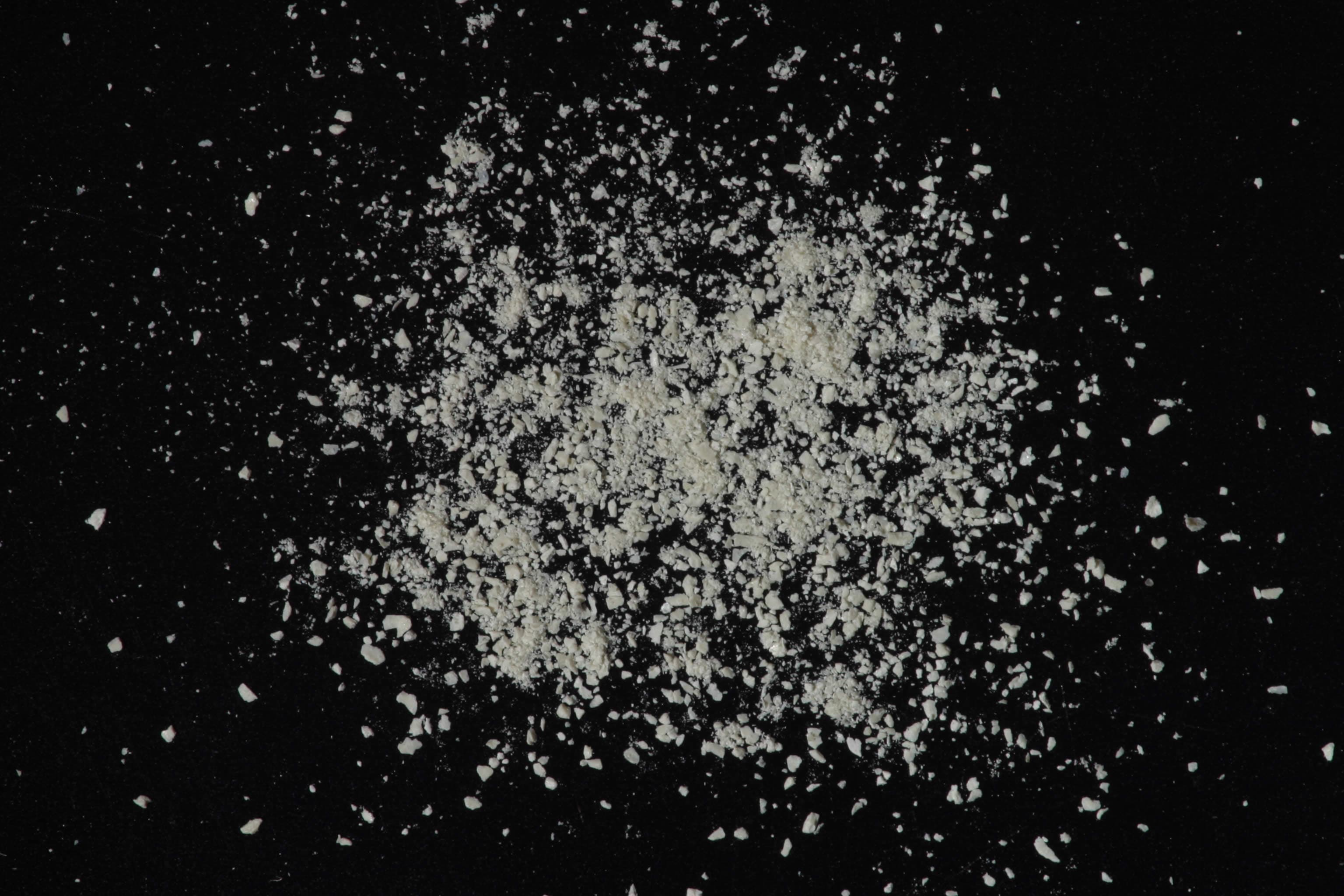
Sample photograph — USGS Spectral Library v7
Spectrum Details
- Modality
- NIR
- Category
- mineral
- Material Type
- Phyllosilicate
- Sample ID
- GDS86
- Collection Locality
- Synthetic
- Spectral Purity
- 1b2_3_4_ # 1= 0.2-3, 2= 1.5-6, 3= 6-25, 4= 20-150 microns
- Composition / XRD
- None # XRF, EPMA, ICP(Trace), WChem
- Sample Description
- IMAGE_OF_SAMPLE:
- XRD Analysis
- 40 kV - 30 mA, 6.5-9.5 keV File: amsmec86_mdi (smear on quartz plate) References: PDF2 #13-0259 43-0688 33-1161; Brindley and Brown (1980) Found: Possible dioctahedral ammonium smectite, quartz Comment: All reflections are broad; the alpha1-alpha2 reflections of quartz are not resolved, even at high values of 2 theta. Clay reflections show only minor asymmetry toward smaller d-spacings. Search-match based upon strongest lines returned quartz and sepiolite, profile-based search-match returned quartz and rectorite. Neither pair satisfactorily explained the observed pattern. Manual search was initiated to identify the non-quartz peaks at 12.2, 4.46, ~3.23, ~2.57, and 1.499 Angstroms by visual comparison with patterns of clay-type minerals. No single phase gave a good match. The most adequate fits were given by 14 Angstroms montmorillonite (13-0259), which does not have a prominent reflection near 1.50 Angstroms, and another dioctahedral smectite, volkonskoite, which does not account for the observed 3.27 Angstrom reflection. The observed basal spacing, 12.2 Angstroms, is smaller than the basal reflections of any other smectites in the PDF2 database. A summary table in Brindley and Brown (1980, p.203-204) shows that substitution of NH4 for any other interlayer cation reduces the basal spacing's of a variety of smectites to 11.7-12.5 Angstroms at 32-79 percent relative humidity, and slightly greater in water.
- X Units
- cm⁻¹
- Y Units
- Absorbance
- Data Points
- 2,126
Download
Attribution
USGS Spectral Library Version 7, U.S. Geological Survey
License: Public Domain
DOI: 10.3133/ds1035Analyze in Workbench
Open this spectrum in the SpectralBench workbench for advanced analysis, peak detection, and comparison.
Open Workbench