Arsenopyrite — NIR2,126 points · 4000–12500 cm⁻¹
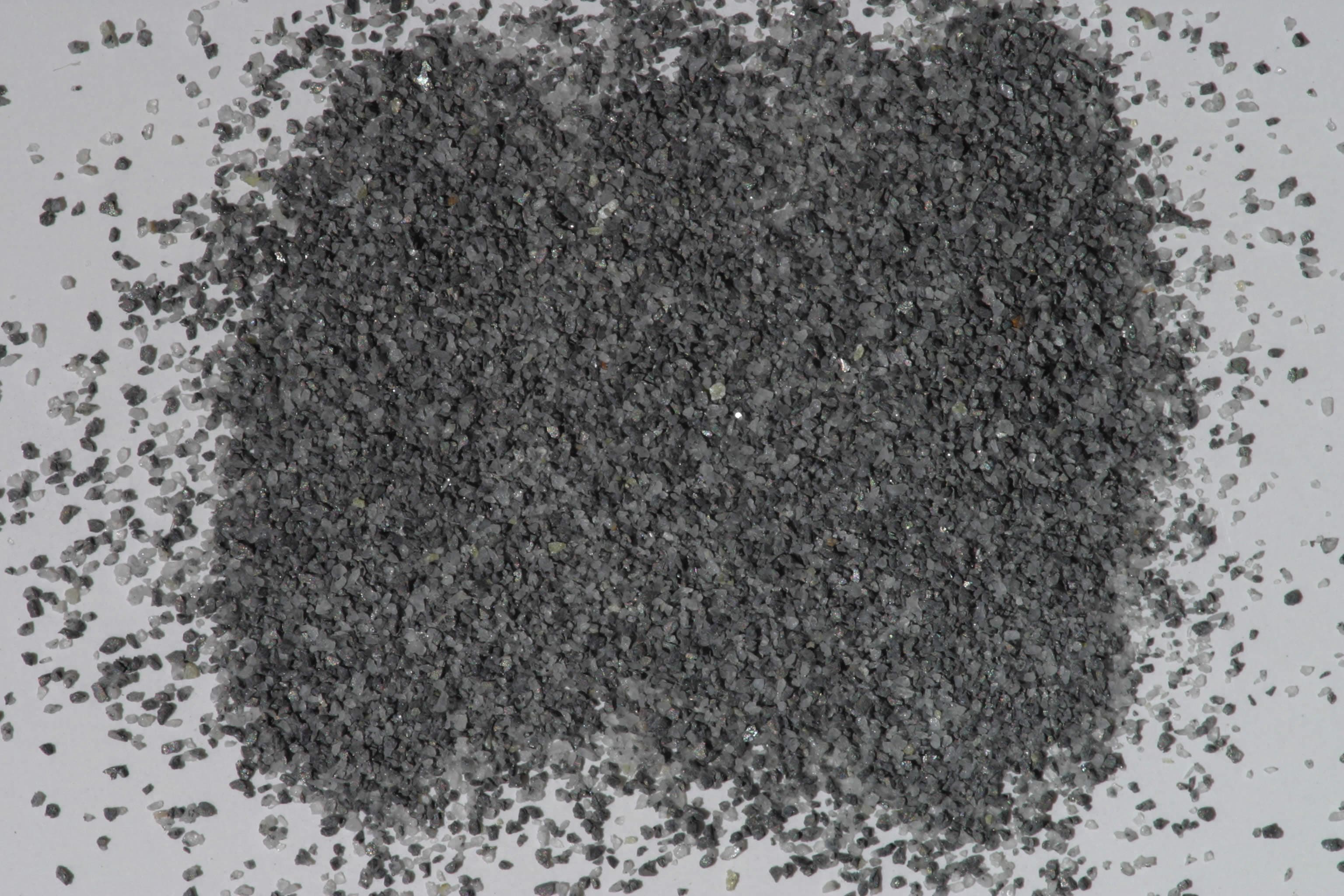
Sample photograph — USGS Spectral Library v7
Spectrum Details
- Modality
- NIR
- Category
- mineral
- Material Type
- Sulfide
- Sample ID
- HS262.1B, HS262.2B, HS262.3B, HS262.4B
- Collection Locality
- Gold Hills, Utah
- Spectral Purity
- 1c2_3_4_ # HS262.1B # 1= 0.2-3, 2= 1.5-6, 3= 6-25, 4= 20-150 microns SPECTRAL_PURITY: 1c2_3_4_ # HS262.2B # 1= 0.2-3, 2= 1.5-6, 3= 6-25, 4= 20-150 microns SPECTRAL_PURITY: 1c2c3d4u # HS262.3B # 1= 0.2-3, 2= 1.5-6, 3= 6-25, 4= 20-150 microns SPECTRAL_PURITY: 1c2_3_4_ # HS262.4B # 1= 0.2-3, 2= 1.5-6, 3= 6-25, 4= 20-150 microns
- Composition / XRD
- NONE #XRF, EPMA, ICP(Trace),WChem
- Sample Description
- Spectra for this sample were originally published in: Hunt, G.R., J.W. Salisbury, and C.J. Lenhoff, 1971, Visible and near-infrared spectra of minerals and rocks: IV. Sulphide's and sulphate's. Modern Geology, v. 3, p. 1-14. With the note: "This sample is contaminated with some quartz and a small amount of pyrite and elemental sulphur. Arsenopyrite is opaque and spectrally featureless. Its opacity is caused by the conduction band extending over the entire range, mainly due to the presence of arsenic. The contaminants in this sample are not abundant enough to alter this behavior, and the fact that the largest particle size falls approximately in the middle of its reflectivity range has no real significance." Sample measured for the library was the 74-250�m sieve interval. Grain size fractions are indicated by the extension after the sample number: .1B = IMAGE_OF_SAMPLE:
- XRD Analysis
- 40 kV - 30 mA, 7.0-9.5 keV File: arsn263.mdi, *.out (smear mount on quartz plate) References: JCPDS #42-1320; Huebner's reference patterns Found: Quartz, arsenopyrite, un-indexed weak to very weak reflections at 6.3, 4.5, 3.42, 3.18, 2.86, and 2.75 Angstroms Comment: Quartz reflections of moderate intensity (the (100) peak of nominal relative intensity 22% did not exceed 200 counts.sec-1), arsenopyrite reflections much weaker. Un indexed reflections could not be identified, suggesting they may represent more than one phase. Peaks are symmetric and of normal width, but alpha1-alpha2 wavelength resolution is poor. Phases are only moderately crystalline.
- X Units
- cm⁻¹
- Y Units
- Absorbance
- Data Points
- 2,126
Download
Attribution
USGS Spectral Library Version 7, U.S. Geological Survey
License: Public Domain
DOI: 10.3133/ds1035Analyze in Workbench
Open this spectrum in the SpectralBench workbench for advanced analysis, peak detection, and comparison.
Open Workbench